Volcano profile · Campania, Italy
Vesuvius
Somma–Vesuvius
One of history’s most famous volcanoes — a younger cone built inside an older volcanic structure, capable of explosive eruptions above one of Europe’s most densely populated regions.
Latest activity and alert levelCheck the live status hub
Vesuvius is monitored continuously by INGV’s Osservatorio Vesuviano. Use the Volcoholics directory for the latest verified operational status.
View latest Vesuvius status →The volcano above the Bay of Naples
Vesuvius is a young cone growing inside the ruins of an older volcano
The familiar Vesuvius skyline is actually a compound volcanic structure known as Somma–Vesuvius.
Monte Somma forms the surviving northern rim of an older edifice, while the younger Gran Cono of Vesuvius grew within its collapse structure. This nested architecture records repeated cycles of construction, major explosive eruption and rebuilding.
Vesuvius is capable of activity ranging from lava effusion and Strombolian explosions to highly explosive sub-Plinian and Plinian eruptions. Its hazard significance is magnified by the dense population surrounding the volcano.
~1,281 mVesuvius elevation
Somma volcanoVolcanic structure
AD 79Defining historical eruption
INGV–OVOfficial monitoring

Vesuvius quick facts
- Region
- Campania
- Structure
- Somma–Vesuvius
- Younger cone
- Gran Cono
- Last eruption
- 1944
- Monitor
- INGV–OV
Activity and behaviour
Vesuvius can shift from lava-producing activity to violent explosive eruption
Evergreen profile
How Vesuvius behaves
Its eruptive record includes prolonged periods of open-conduit activity with lava flows and Strombolian explosions, but also far larger explosive events producing pumice fall, ash and pyroclastic density currents.
Check the latest verified status →Explosive stylePlinian & sub-PlinianSustained eruption columns can distribute pumice and ash over large areas
Fastest hazardPyroclastic currentsHot gas and fragmented material can sweep rapidly downslope
Effusive activityLava flowsHistorical eruptions have repeatedly sent lava down the cone
Secondary hazardLahars & floodsLoose deposits can be remobilised by water
ExposureDense populationHazard planning is inseparable from the communities surrounding Vesuvius
Why Plinian eruptions matter
The eruption column is only one part of the danger
A powerful eruption can drive pumice and ash high into the atmosphere. Heavy material falls from the column downwind, while instability in the column can send dense mixtures of hot ash and gas collapsing back toward the ground.
Volcanic architecture
The cone tourists recognise sits inside a much older volcanic story
Monte Somma is not a neighbouring unrelated mountain. It is the remnant of an older volcano whose summit area was profoundly modified by large explosive eruptions and collapse.
The modern Gran Cono subsequently grew inside that older structure. From many viewpoints around Naples, Monte Somma and Vesuvius therefore appear as two peaks even though they are parts of one evolving volcanic complex.
Monte SommaOlder remnant forming the northern arc.
Gran ConoYounger cone of modern Vesuvius.
Nested structureRepeated destruction and rebuilding shaped the complex.
Steep drainageValleys and channels influence downslope hazards.

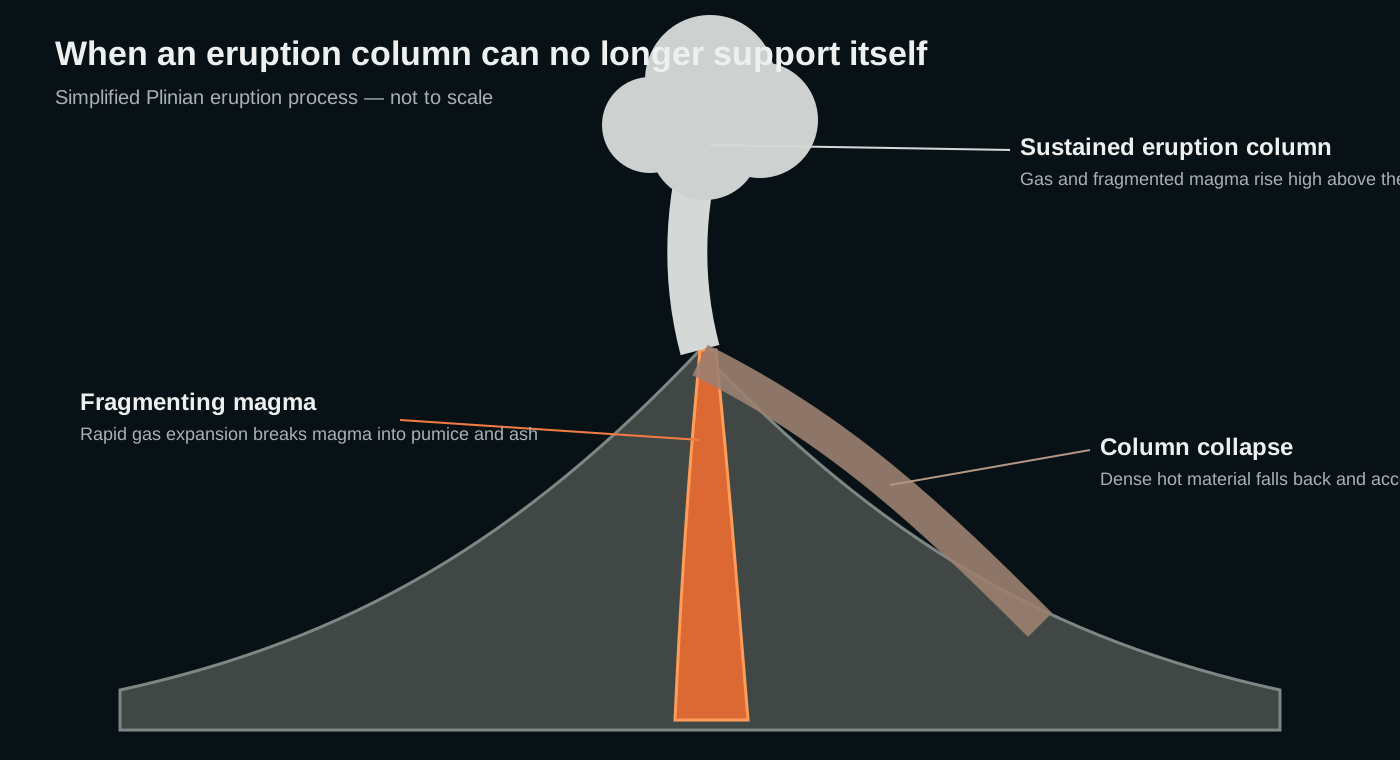
How a Plinian eruption works
A rising column can become a ground-hugging catastrophe
Gas-rich magma fragments violently as pressure falls, producing pumice, ash and volcanic gas. If the mixture remains buoyant it can form a towering eruption column and spread tephra downwind.
If parts of that column become too dense to remain aloft, they collapse. Hot mixtures of gas, ash and rock then move outward as pyroclastic density currents — the process central to understanding the destruction around Vesuvius in AD 79.
Monitoring
Watching earthquakes, gas and deformation beneath a heavily populated volcano
INGV’s Osservatorio Vesuviano maintains continuous surveillance of Vesuvius. Monitoring seeks changes across several independent parameters rather than relying on any single signal.
A volcano through time
Vesuvius eruption timeline
Bronze AgeAvellino eruption
Major prehistoric Plinian eruption
Long before Pompeii, Vesuvius produced a powerful explosive eruption that blanketed parts of Campania with pumice and generated pyroclastic currents.
Defining eventAD 79
Plinian eruption buries Roman communities
Pumice fall and later pyroclastic density currents devastated settlements including Pompeii and Herculaneum, creating the eruption that became the archetype of Plinian activity.
AD 472
Powerful explosive eruption
A major post-Roman eruption produced widespread tephra and demonstrated that AD 79 was not an isolated explosive event.
New eruptive era1631
Destructive eruption ends centuries of relative quiet
Explosive activity, pyroclastic currents and lahars caused severe destruction and loss of life around the volcano.
1631–1944
Frequently active open-conduit period
Vesuvius produced repeated Strombolian activity, lava flows and explosive eruptions over more than three centuries.
Last eruption1944
Lava flows and explosive activity close the latest eruptive cycle
The March 1944 eruption produced lava flows and explosive phases. No eruption has occurred since, although the volcano remains active and continuously monitored.
Hazards
Vesuvius combines extreme volcanic hazards with extreme exposure
Fast, hot mixtures of ash, rock and gas represent one of the most severe hazards.
Heavy tephra accumulation can damage roofs and infrastructure over broad areas.
Explosive activity can throw blocks around the crater and upper flanks.
Effusive eruptions can threaten communities and infrastructure on the lower slopes.
Rain and water can remobilise loose volcanic deposits into destructive flows.
Gas emissions and hydrothermal changes are important both as hazards and monitoring signals.
Myths versus reality
Pompeii is only one chapter in the Vesuvius story
Its geological and historical record contains several major explosive eruptions before and after AD 79.
A long repose interval does not make an active volcanic system extinct; Vesuvius remains monitored continuously.
Pumice fall was crucial at Pompeii, but later pyroclastic density currents swept through the area; Herculaneum was especially affected by pyroclastic currents.
Volcoholics insight
Vesuvius became the textbook volcano because its history was preserved around it
The importance of Vesuvius goes far beyond its famous silhouette. Archaeology, eyewitness testimony and modern volcanology overlap here in extraordinary detail. AD 79 gave science the word “Plinian”, but the wider Somma–Vesuvius record shows a volcano repeatedly changing style, rebuilding itself and reminding Naples why its quiet periods matter.
Questions answered
Vesuvius explained
Is Mount Vesuvius still an active volcano?
Yes. Its most recent eruption was in 1944, and it remains an active volcano under continuous surveillance.
What is Monte Somma?
Monte Somma is the surviving remnant of the older volcanic edifice surrounding the younger Vesuvius cone on its northern side.
What made the AD 79 eruption so destructive?
It combined heavy pumice fall with later pyroclastic density currents, affecting Roman settlements around the volcano.
Why are eruptions like AD 79 called Plinian?
The term honours Pliny the Younger, whose letters described the eruption and its towering cloud.
Where can I find Vesuvius’s current status?
Use the Volcoholics volcano directory for the latest verified summary and INGV’s Osservatorio Vesuviano for official monitoring information.
Official science, made readable
Built from the agencies studying Vesuvius
This evergreen profile separates the volcano’s permanent geology, eruption history and hazards from its changing operational status.
INGV — Osservatorio VesuvianoOfficial surveillance, monitoring networks, geological information and scientific research for Vesuvius and Campanian volcanoes.
Italian Civil ProtectionNational volcanic-risk planning and emergency information for the Vesuvius area.
Smithsonian Global Volcanism ProgramLong-term eruption chronology and geological reference information for Vesuvius.