Volcano profile · Tenerife, Canary Islands
Teide
Spain’s highest mountain and the summit of a much larger volcanic system — a post-caldera complex of phonolitic domes, flank vents, lava flows and persistent fumaroles.
Latest activity and alert levelCheck the live status hub
Teide–Pico Viejo is monitored continuously for seismic, deformation and gas changes. View the Volcoholics volcano directory for the latest verified official position from Spain’s IGN.
View latest Teide status →Tenerife’s volcanic summit
Teide is the peak of a system much larger than the cone
Pico del Teide rises to 3,718 metres, making it the highest mountain in Spain and the dominant summit of Tenerife.
But Teide is only part of the story. The Teide–Pico Viejo complex grew after formation of the great Las Cañadas depression, alongside domes, lava fields and numerous younger vents across the central part of the island.
The result is a volcanic landscape built in stages rather than a single cone. Basaltic magma, evolved phonolitic magma, flank fissures and central vents have all contributed to Tenerife’s recent volcanic history.
3,718 mSummit elevation
Teide–Pico ViejoVolcanic complex
Las CañadasCaldera setting
IGNOfficial monitoring
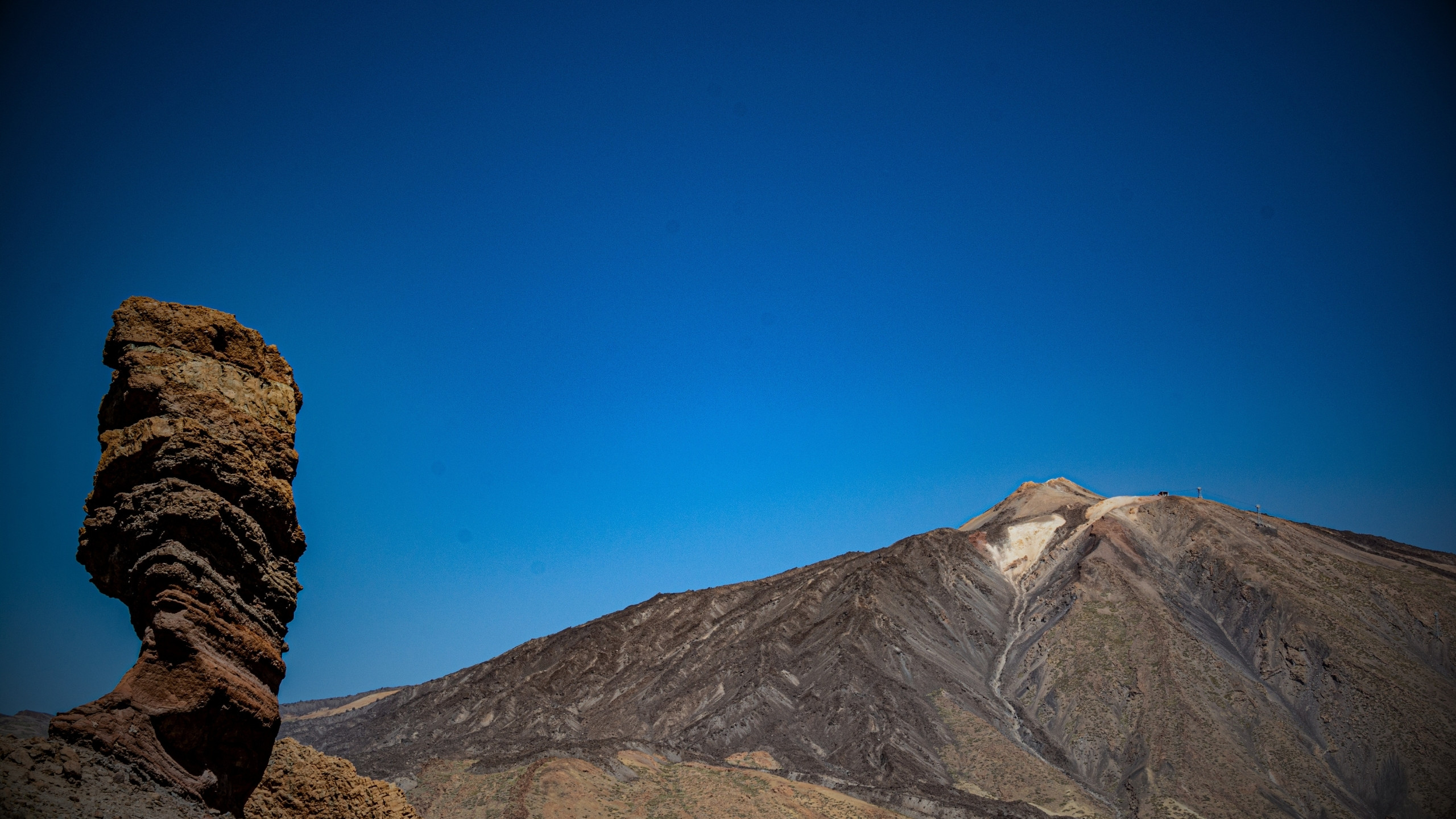
Teide quick facts
- Highest point
- 3,718 metres
- Island
- Tenerife
- Main complex
- Teide–Pico Viejo
- Distinctive magma
- Phonolite
- Official agency
- IGN Spain
Activity and behaviour
A quiet-looking summit above an active volcanic system
Evergreen profile
How Teide behaves
Teide’s recent geological history includes summit and flank volcanism, lava flows, domes and explosive phonolitic eruptions. Today, fumaroles at the summit remain a visible reminder that heat and gas continue to move through the system.
Check the latest verified status →Summit featureFumarolesWarm gas vents persist around the summit crater
Evolved magmaPhonoliteViscous silica-rich magma can produce domes and explosive eruptions
Flank activityFissure eruptionsHistorical vents have opened away from Pico del Teide itself
Effusive activityLava flowsDark young flows cover parts of the caldera floor and outer slopes
Official sourceIGNSpain’s official volcanic monitoring network
The volcano is bigger than the summit
Future activity does not have to come from Pico del Teide
Tenerife’s recent eruptions show that volcanic activity can open along rift zones and flank vents as well as within the central Teide–Pico Viejo complex. The hazard is therefore an island-scale volcanic-system problem, not simply a crater problem.
Volcanic architecture
Teide and Pico Viejo rose inside Las Cañadas
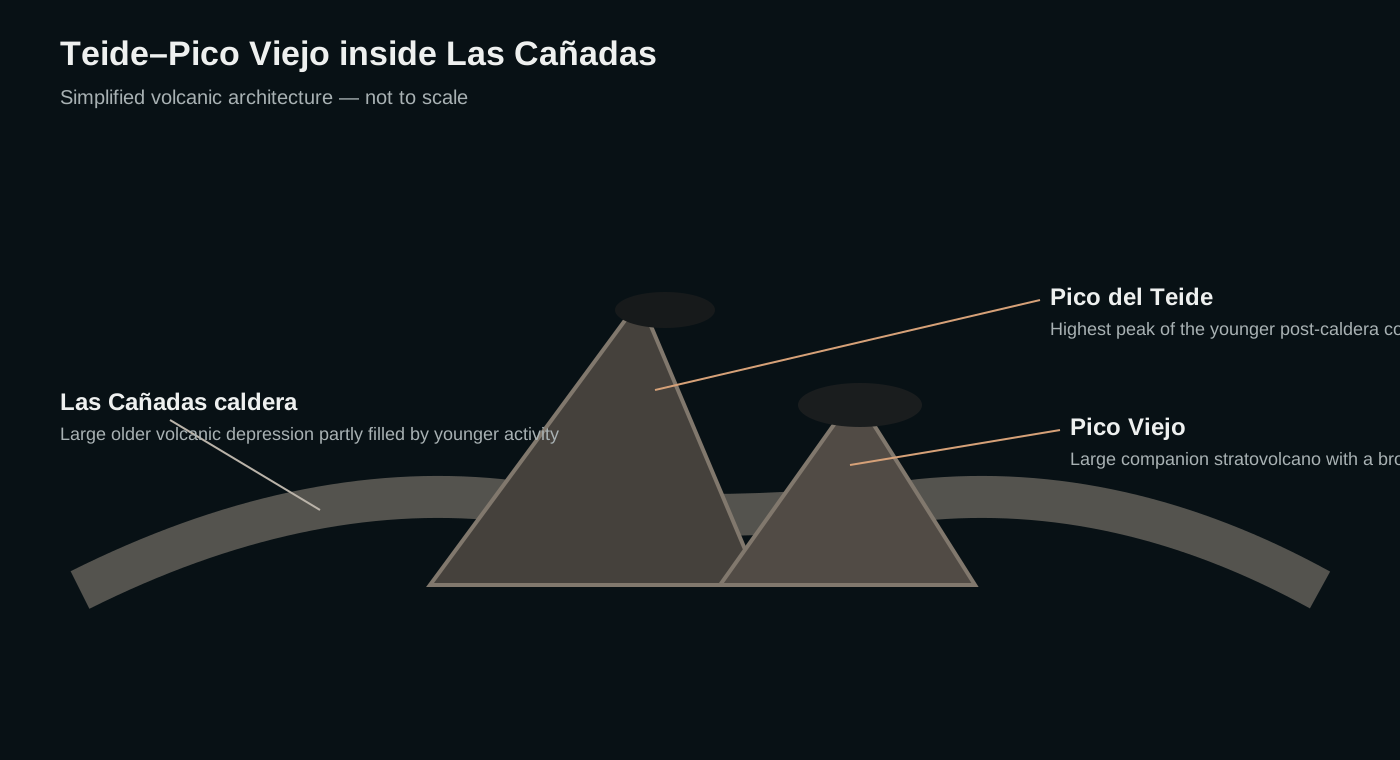
The central complex consists of Pico del Teide and neighbouring Pico Viejo, both constructed within the much larger Las Cañadas volcanic depression. Younger lava flows, domes and vents partly fill the caldera floor.
Pico Viejo is not a minor side cone: it is a major volcanic edifice in its own right, with a broad summit crater and an eruption history closely tied to the younger evolution of central Tenerife.
Las CañadasA large older volcanic depression surrounding the central complex.
Pico del TeideThe highest point of Tenerife and Spain.
Pico ViejoA major companion stratovolcano with a broad summit crater.
Post-caldera ventsDomes and lava flows occupy the caldera floor and surrounding rifts.
How Teide works
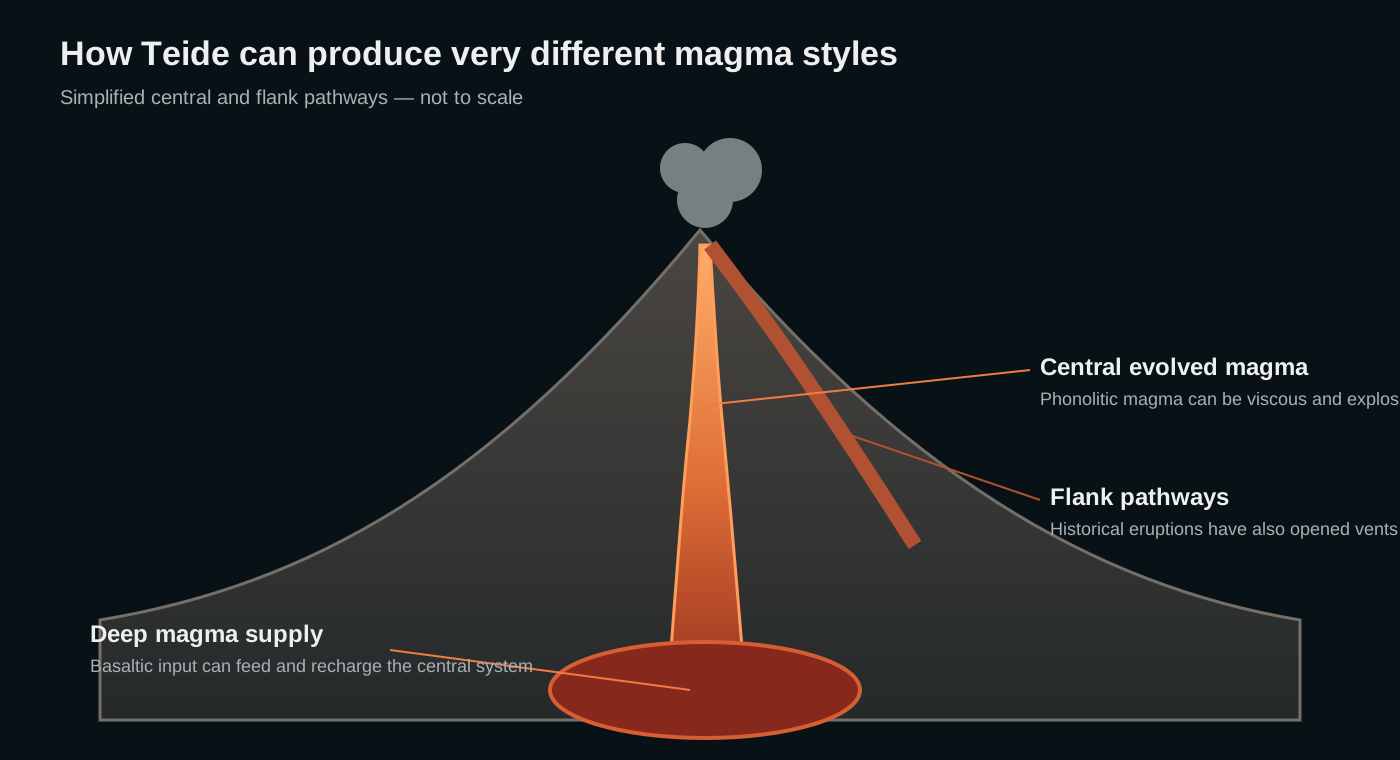
Basaltic supply can feed a much more evolved central system
Tenerife can erupt relatively fluid basaltic magma from rift zones, but the Teide–Pico Viejo central system has also produced evolved phonolitic magma. Longer storage and differentiation can make this magma more viscous and potentially more explosive.
That contrast is one reason Tenerife’s volcanic behaviour is so varied: cinder cones and lava flows can coexist in the geological record with domes and major explosive deposits.
Monitoring
Watching seismicity, deformation and gas across Tenerife
Spain’s Instituto Geográfico Nacional operates the official volcanic surveillance network in the Canary Islands. Monitoring combines seismic, geodetic and geochemical observations across Tenerife rather than focusing only on the summit.
A volcano through time
Teide and Tenerife eruption timeline
~2,000 years ago
Montaña Blanca explosive eruption
A major sub-Plinian phonolitic eruption east of Teide produced widespread pumice and is one of the most important young explosive events in the central complex.
1492
Possible activity seen by Columbus
Christopher Columbus reported seeing fire on Tenerife while passing the island; whether this represents an eruption remains uncertain.
1704–05
Flank eruptions in Tenerife’s rift system
Multiple vents opened during a prolonged eruptive period, reinforcing that historical volcanism is not confined to Teide’s summit.
Historic eruption1706
Trevejo eruption destroys Garachico harbour
Lava from a flank eruption reached the north coast and severely damaged Garachico, demonstrating the island-scale impact of basaltic lava flows.
1798
Chahorra / Narices del Teide eruption
A prolonged eruption on the flank of Pico Viejo produced lava flows within the Las Cañadas area.
Latest Tenerife eruption1909
Chinyero eruption
Tenerife’s most recent eruption opened on the north-west rift zone and produced basaltic lava flows for around ten days.
Hazards
The hazards that matter most around Teide
Basaltic flank eruptions can send lava across roads, land and settlements.
Explosive phonolitic activity could spread ash well beyond the central caldera.
Large explosive eruptions can generate dangerous hot ash-and-gas currents.
Blocks and bombs are important near active vents.
Fumarolic gases can accumulate locally around summit vents.
Future activity may open away from the central summit along Tenerife’s rift zones.
Myths versus reality
Teide is more than the mountain tourists see
Historical Tenerife eruptions show that new vents can open along flank and rift systems.
Tenerife belongs to an active volcanic archipelago and remains monitored continuously.
The central Teide–Pico Viejo complex has produced evolved phonolitic magma as well as lava flows.
Volcoholics insight
Standing on Pico del Teide means standing on the youngest summit of a much older volcanic story
The view from 3,718 metres makes Teide feel like the whole volcano. It is not. Pico Viejo, Las Cañadas, the rift zones, lava fields and domes all belong to the same evolving island system — one built by repeated episodes that have shifted where and how Tenerife erupts.
Questions answered
Teide explained
Where can I find Teide’s latest official status?
Use the Volcoholics volcano directory for the latest verified summary, then follow Spain’s Instituto Geográfico Nacional for authoritative monitoring information.
How high is Pico del Teide?
Pico del Teide reaches 3,718 metres above sea level, making it the highest mountain in Spain.
Is Pico Viejo part of Teide?
Pico Viejo and Pico del Teide form the young Teide–Pico Viejo volcanic complex within Las Cañadas.
When did Tenerife last erupt?
Tenerife’s most recent historical eruption was Chinyero in 1909 on the north-west rift zone.
Who monitors Teide?
Spain’s Instituto Geográfico Nacional operates the official volcanic surveillance network for the Canary Islands.
Official science, made readable
Built from the agencies studying Teide
This evergreen profile uses Spain’s Instituto Geográfico Nacional and Smithsonian Global Volcanism Program material as its factual basis. Permanent geology, eruptive behaviour and history are separated from today’s operational status.
Instituto Geográfico Nacional (IGN)Official Canary Islands volcanic monitoring, seismicity, deformation and geological information.
Smithsonian Global Volcanism ProgramLong-term eruption chronology, Teide–Pico Viejo morphology and geological reference data.