Life on the island
Stromboli and Ginostra are not observation posts built around a volcano. They are communities — with homes, ferries, shops, restaurants, beaches, licensed guides and seasonal visitors — whose daily routines unfold on the lower slopes of an active volcanic island with no road connecting it to the mainland.
Island life is shaped by ordinary island constraints — rough seas, limited transport links, steep paths and intense seasonal visitor pressure — alongside ash, volcanic gas, rockfall and the possibility that summit conditions can change quickly. The volcano is always present, but not always dramatic. On many days it is a distant rumble or a faint white plume above the ridge.
When it becomes dramatic, the change can be rapid. Heightened activity, access restrictions, ashfall from a larger explosion, or evacuation planning can become part of immediate decision-making for residents and visitors alike — sometimes without much notice.
Risk and preparedness
Access to the upper slopes above 290 metres is regulated because authorised routes cross terrain where ballistic fragments, sudden explosion intensification and changing weather are all genuine risks. Guided access and official restrictions are not bureaucratic formalities — they are the primary mechanism by which visitor risk is managed on a volcano that explodes hundreds of times per day.
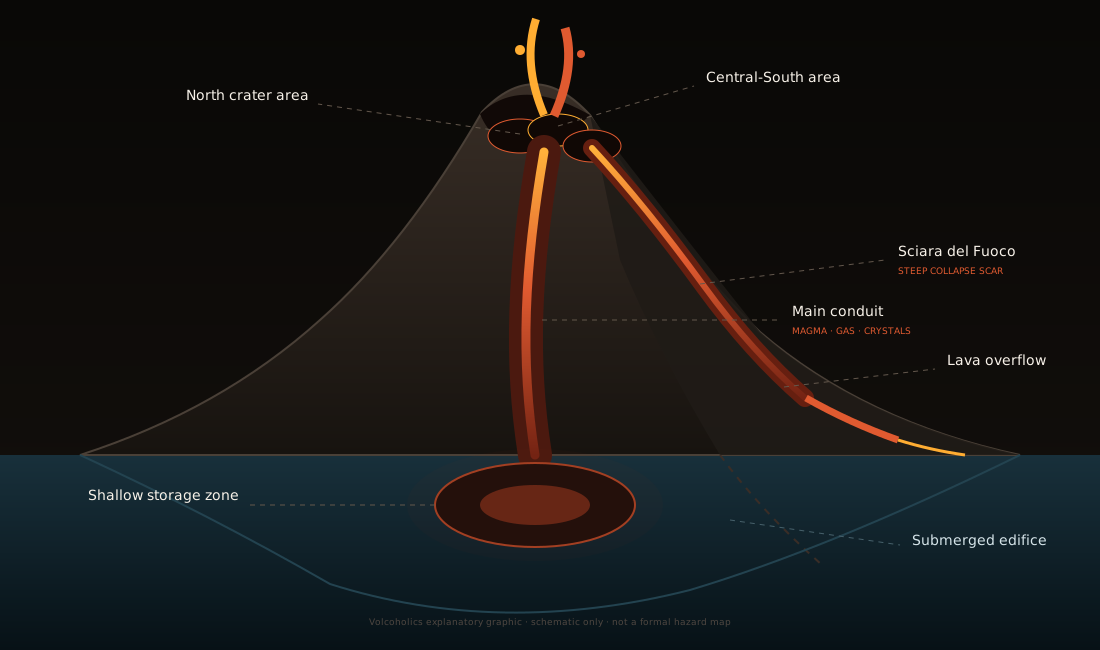
Preparedness extends well beyond the summit. Communication, harbour access, coastal evacuation routes and tsunami awareness all matter on a small island where the volcano and the surrounding sea can interact during the same event. The 2002 tsunami was a reminder that the hazard envelope is not limited to the crater area.
Residents live with layers of overlapping risk rather than a single eruption scenario: summit explosions, Sciara collapses, tsunami potential, seasonal sea states and the logistical reality of moving people from a remote island if a major event requires it.