Volcano profile · Unimak Island, Alaska
Shishaldin
One of the world’s most symmetrical stratovolcanoes — an open-vent Aleutian volcano capable of lava fountains, Strombolian explosions, lava flows and high ash plumes.
Latest activity and alert levelCheck the live status hub
Shishaldin can move rapidly between quiet steaming and vigorous eruption. View the Volcoholics volcano directory for the latest verified official position from the Alaska Volcano Observatory.
View latest Shishaldin status →The Aleutians’ near-perfect cone
Symmetry built by eruption after eruption
Shishaldin rises 2,857 metres above Unimak Island and is one of the most active volcanoes in the Aleutian arc.
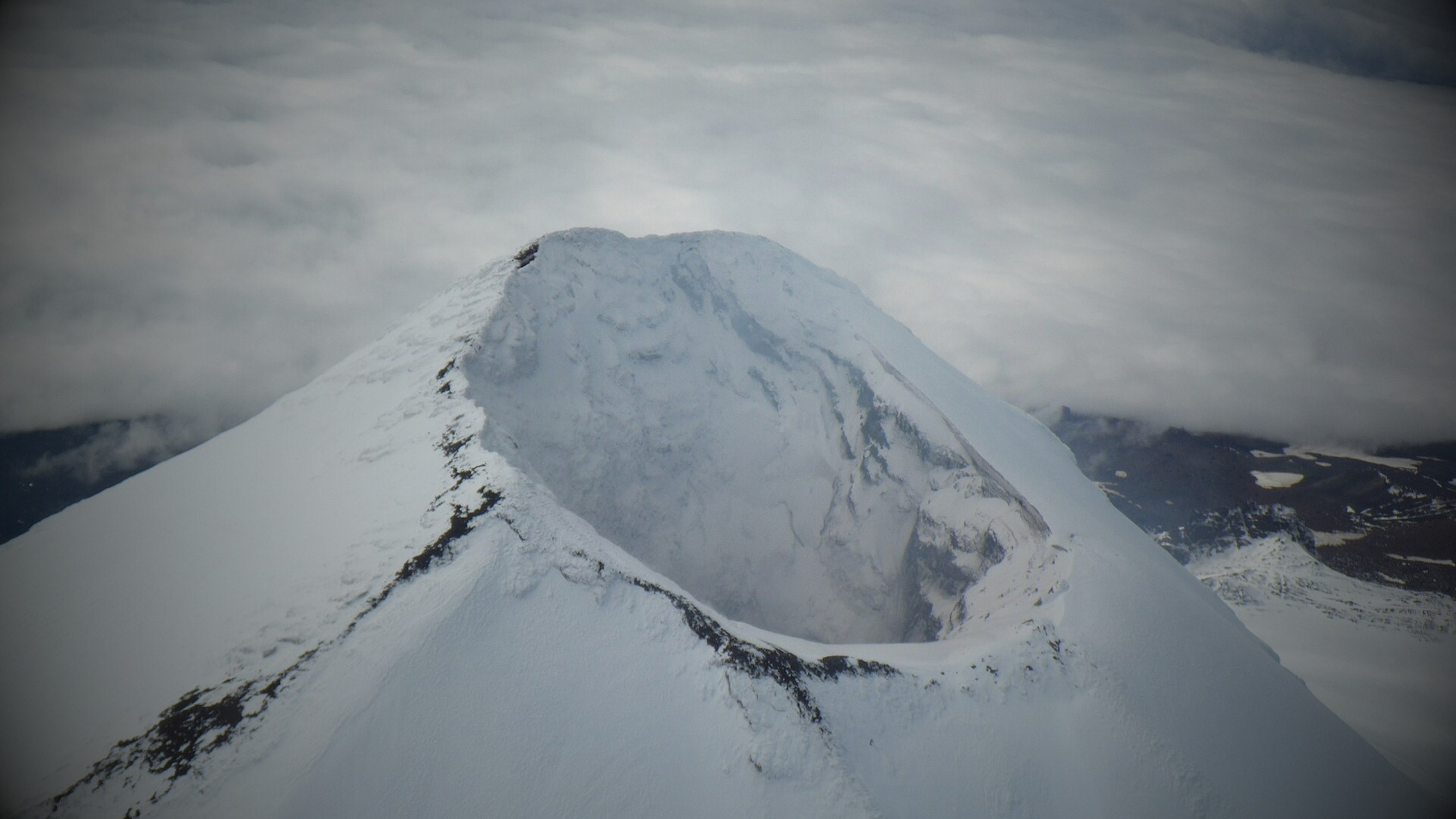
Its steep, remarkably symmetrical cone is built largely of alternating lava flows and fragmental volcanic deposits. A small summit crater sits at the top of the cone and has frequently emitted steam and volcanic gas even between eruptive episodes.
The volcano’s open summit system helps explain its characteristic behaviour: Strombolian bursts, lava fountains, lava flows and ash-producing explosions can all emerge from the same compact summit vent.
2,857 mSummit elevation
StratovolcanoVolcano type
Unimak IslandLocation
USGS / AVOOfficial monitoring
Shishaldin quick facts
- Volcanic arc
- Aleutian
- Island
- Unimak
- Volcano type
- Stratovolcano
- Summit
- Open crater
- Official agency
- USGS / AVO
Activity and behaviour
Open-vent activity with the ability to escalate fast
Evergreen profile
How Shishaldin behaves
Shishaldin commonly shifts between persistent summit steaming and episodes of Strombolian explosions, lava fountaining and lava effusion. Stronger eruptive phases can generate substantial ash clouds and fast-moving hot material on the upper flanks.
Check the latest verified status →Characteristic activityStrombolian explosionsGas bursts eject incandescent fragments from the summit
Effusive activityLava flowsLava can descend the steep upper flanks
High-energy phasesLava fountainsIntense degassing can produce sustained incandescent jets
Regional hazardAsh cloudsExplosive phases can inject ash into busy North Pacific airspace
Official sourceUSGS / AVOAuthoritative monitoring and hazard guidance
Beautiful symmetry, dynamic behaviour
A perfect cone does not mean a simple volcano
Shishaldin’s shape can make it look almost geometrically tidy, but its eruptive system is anything but static. Lava, bombs, ash and hot avalanches can all be produced during vigorous phases.
Volcanic architecture
One of Earth’s most symmetrical volcanic cones
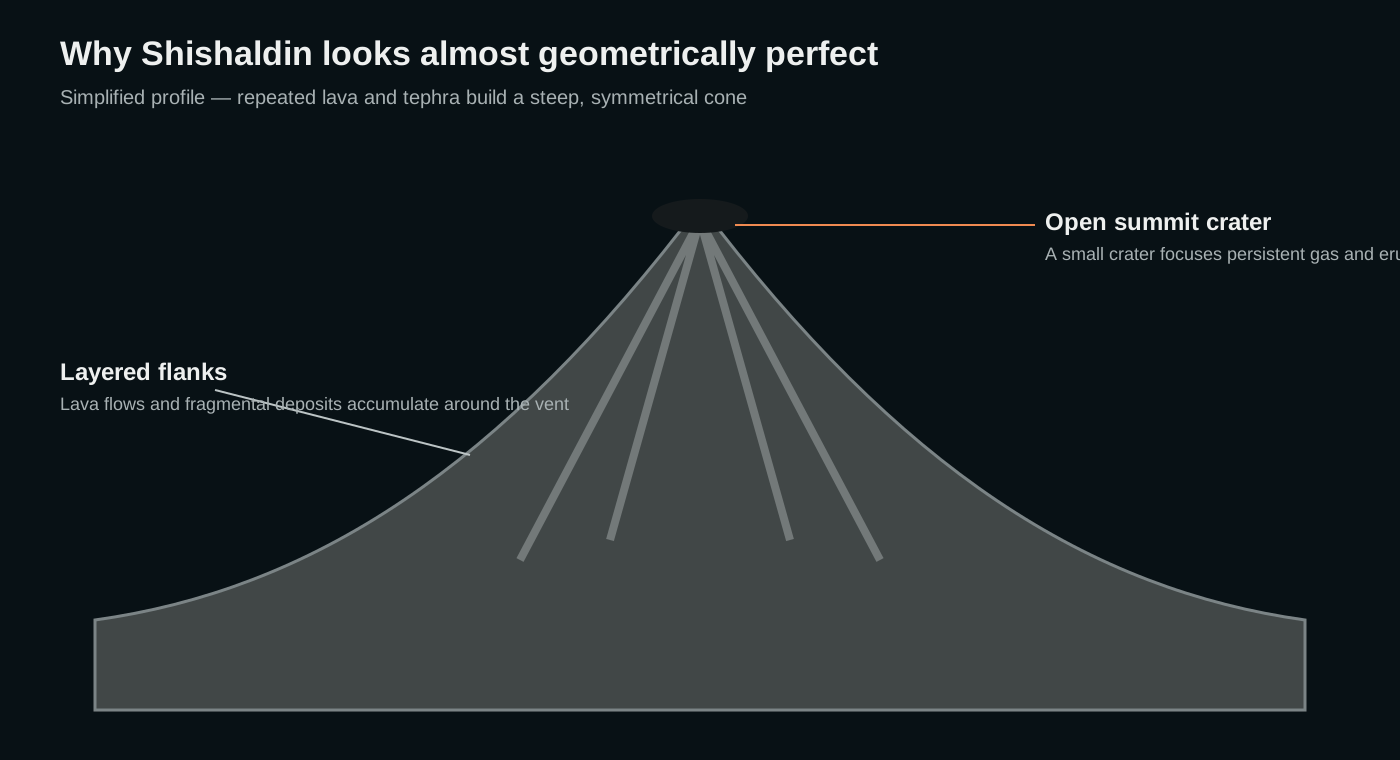
Shishaldin’s near-perfect profile reflects repeated construction around a central vent. Lava and loose tephra have accumulated on all sides, while the summit remains focused around a small open crater.
Snow and ice accentuate the geometry, tracing gullies down the flanks and making the cone’s symmetry particularly striking from a distance.
Central ventModern activity is focused at the summit.
Layered coneLava and tephra repeatedly rebuild the flanks.
Steep slopesHot debris and lava can move quickly downslope.
Summit craterPersistent steaming reflects an open hydrothermal-magmatic pathway.
How Shishaldin erupts
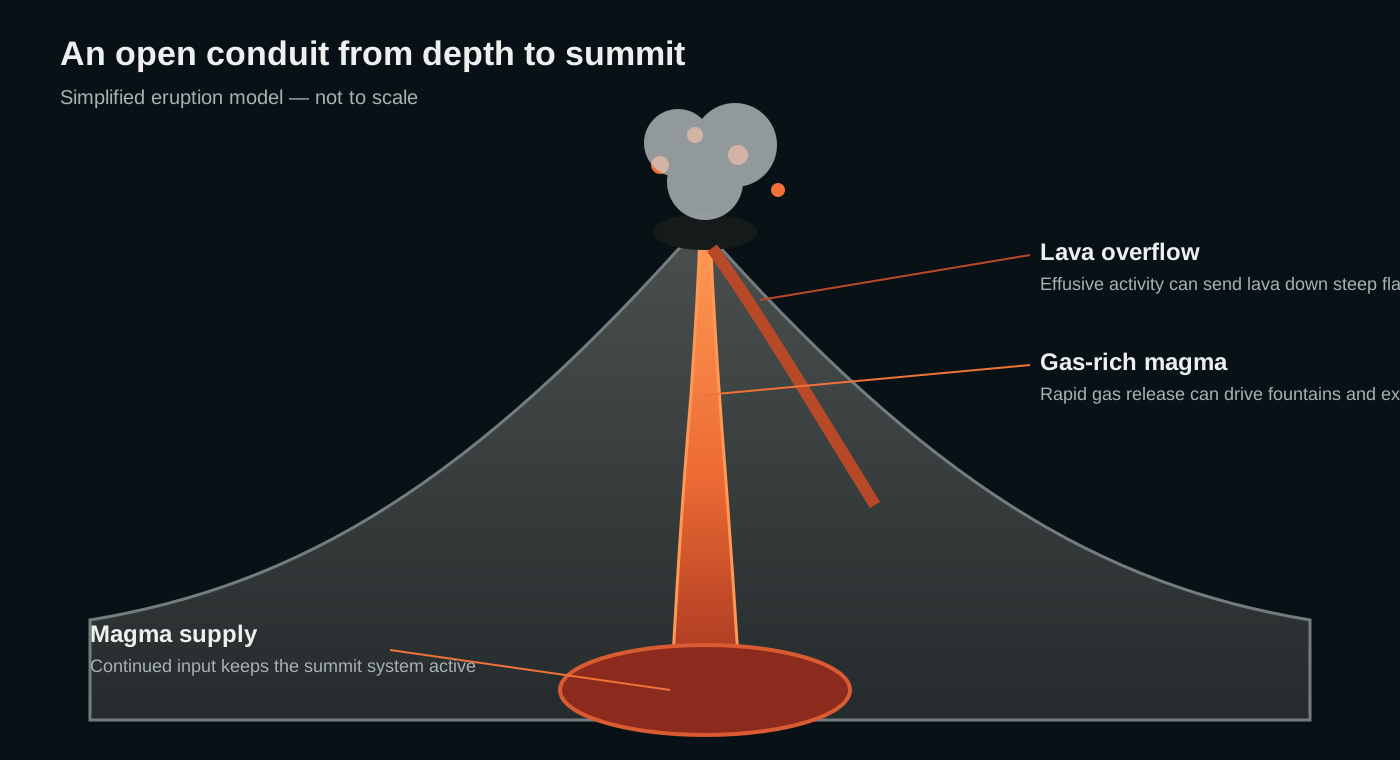
An open summit pathway links deep magma to the surface
Gas-rich magma rises through the central conduit. At lower intensity, the system may simply steam and degas. As magma rises faster, expanding gas can drive Strombolian explosions and lava fountains.
Lava may overflow the summit crater and descend the flanks, while stronger fragmentation can generate ash columns capable of reaching aviation routes above the Aleutians.
Monitoring
Watching an isolated volcano with instruments on the ground and in space
The Alaska Volcano Observatory combines local instruments with satellite and remote observations. This is crucial in the Aleutians, where weather, distance and sparse population make direct observation difficult.
A volcano through time
Shishaldin eruption timeline
1775
Early historical activity
One of the earliest documented reports begins Shishaldin’s long historical eruption record.
1824–25
Explosive activity recorded
Historical observations describe renewed eruption from the summit.
1932
Strong twentieth-century eruption
Explosive activity and lava were reported during a notable eruptive episode.
Major modern eruption1999
Lava fountains and high ash
A powerful eruption produced vigorous Strombolian activity, lava fountains, lava flows and ash columns that became a benchmark modern Shishaldin event.
2014–16
Persistent low-level eruption
Extended summit activity included lava, Strombolian explosions and thermal anomalies.
2019–20
Repeated explosive and effusive phases
Months of activity included lava flows, fountains, ash emissions and periods of stronger explosive behaviour.
Recent major sequence2023
Multiple powerful explosive events
A sequence of explosive episodes produced high ash clouds, pyroclastic flows and lahars on the flanks, demonstrating how quickly Shishaldin can intensify.
Hazards
The hazards that matter most at Shishaldin
High-altitude ash is a major concern for aircraft crossing the North Pacific.
Bombs and blocks threaten the summit and upper slopes.
Hot lava can descend rapidly over Shishaldin’s steep flanks.
Hot mixtures of ash, gas and rock can race down the volcano during stronger eruptions.
Hot eruptive material can melt snow and ice, generating water-rich debris flows.
Gas is continuously released from the open summit system and increases during eruption.
Myths versus reality
A symmetrical volcano is not a predictable volcano
Shishaldin can produce Strombolian bursts, fountains, lava, ash clouds and density currents.
Its ash can affect major international aviation routes far from the volcano.
Open-vent degassing is normal for Shishaldin, but monitoring detects changes that may signal escalation.
Volcoholics insight
Shishaldin looks simple because thousands of eruptions have made it so symmetrical
Its clean outline hides a remarkably versatile eruptive system. The same central pathway that quietly vents steam can feed fountains, lava flows and powerful ash-producing explosions — sometimes with very little visual warning beneath Aleutian cloud.
Questions answered
Shishaldin explained
Where can I find Shishaldin’s latest official status?
Use the Volcoholics volcano directory for the latest verified summary, then follow the Alaska Volcano Observatory for authoritative alert levels, aviation colour codes and bulletins.
Why is Shishaldin so symmetrical?
Repeated lava flows and fragmental deposits have accumulated around a central summit vent, building a steep cone with unusually even flanks.
What type of volcano is Shishaldin?
It is a basaltic-to-andesitic stratovolcano in the Aleutian volcanic arc.
Why is Shishaldin important to aviation?
Explosive eruptions can send volcanic ash into heavily travelled North Pacific air routes.
Who monitors Shishaldin?
The Alaska Volcano Observatory, a partnership involving the USGS and Alaskan institutions, monitors the volcano.
Official science, made readable
Built from the agencies watching Shishaldin
This evergreen profile uses Alaska Volcano Observatory / USGS material and Smithsonian Global Volcanism Program records as its factual basis. Permanent geology, eruption style, hazards and history are kept separate from today’s operational status.
Alaska Volcano Observatory / USGSOfficial monitoring, eruption observations and hazard information for Shishaldin.
Smithsonian Global Volcanism ProgramLong-term eruption chronology, morphology and geological reference information.