Volcano profile · El Salvador
San Miguel
Chaparrastique
A steep, remarkably symmetrical stratovolcano above eastern El Salvador — known for summit explosions, ash-rich plumes and rain-remobilised volcanic debris.
Latest activity and alert levelCheck the live status hub
Chaparrastique is monitored for seismicity, gas, deformation and surface activity. Use the Volcoholics directory for the latest verified official position from El Salvador’s environmental authorities.
View latest San Miguel status →Eastern El Salvador’s landmark volcano
A near-perfect cone with an untidy eruptive personality
San Miguel — widely known as Chaparrastique — rises to about 2,130 metres immediately west of the city of San Miguel.
Its regular outline hides a complex summit and upper flanks cut by deep radial gullies. Historical activity has commonly involved relatively short explosive episodes from the summit crater, producing ash plumes and ejecting material onto the upper cone.
The steep slopes create a second problem after ash has fallen: tropical rain can remobilise loose volcanic material into lahars and sediment-rich flows that follow established channels downslope.
~2,130 mSummit elevation
StratovolcanoVolcano type
San MiguelNearest major city
MARN / DOAOfficial monitoring

San Miguel quick facts
- Local name
- Chaparrastique
- Type
- Stratovolcano
- Setting
- Eastern El Salvador
- Typical hazard
- Ashfall
- Secondary hazard
- Lahars
Activity and behaviour
Short explosions can have consequences far beyond the crater
Evergreen profile
How Chaparrastique behaves
Historical activity is dominated by summit-centred explosive episodes. Gas-rich magma and pressure changes can drive sudden ash emissions, while fresh deposits on the steep flanks can later be remobilised by rainfall.
Check the latest verified status →Common activityAsh explosionsShort pulses can produce ash-rich plumes from the summit
Near-vent hazardBallistic ejectaBlocks and bombs can affect the upper cone
Persistent processDegassingVolcanic gas is an important indicator of the system below
Rainfall interactionLaharsLoose ash and debris can be remobilised into gullies
Official sourceEl Salvador authoritiesNational volcanic surveillance and hazard information
A two-stage hazard
The eruption can end before the danger from its ash does
Fresh ash and fragmented rock deposited on Chaparrastique’s steep slopes can remain unstable after eruptive activity declines. Heavy rain can pick up this material and drive lahars or sediment-laden flows through radial drainage channels.
Volcanic architecture
A symmetrical cone carved by dozens of natural channels
Chaparrastique’s classic profile is one of its defining features. Yet close up, the upper cone is heavily dissected by gullies radiating away from the summit.
Those channels matter. They provide efficient pathways for rainfall, loose ash and volcanic debris, connecting processes at the summit with communities and infrastructure much farther downslope.
Summit craterThe principal focus of historical explosive activity.
Radial drainageGullies extend outward across much of the cone.
Young depositsAsh and fragmented material repeatedly mantle the upper slopes.
Steep reliefRapid elevation loss encourages fast-moving flows.

How Chaparrastique works
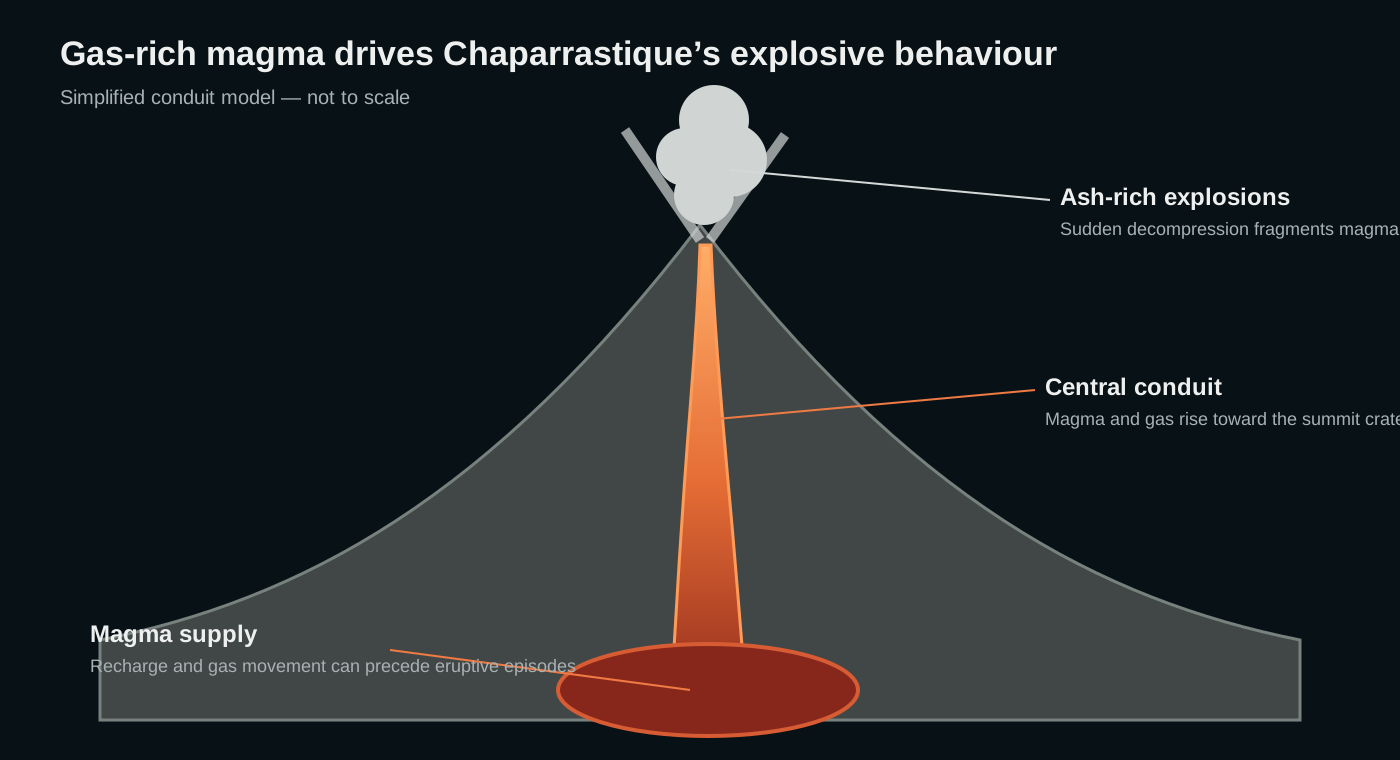
Gas-rich magma can turn pressure into sudden ash explosions
Magma rising beneath San Miguel releases volcanic gases as pressure falls. If gas accumulates or the shallow conduit becomes temporarily restricted, pressure can build until fragmentation produces an explosive ash emission.
Not every change below the volcano leads to an eruption. Seismicity, gas output and surface observations are interpreted together to understand whether magma or fluids are moving through the system.
Monitoring
Watching earthquakes, gas and the summit around the clock
San Miguel is one of El Salvador’s closely watched active volcanoes. Monitoring combines seismic instruments with gas measurements, visual observations, cameras and deformation techniques to identify meaningful changes in the system.
A volcano through time
San Miguel eruption timeline
16th century
Historical activity enters the written record
Chaparrastique has a long record of observed eruptive activity following Spanish settlement of El Salvador.
1844
Strong historical eruptive episode
One of several 19th-century eruptions that established San Miguel as one of El Salvador’s persistently active volcanic centres.
1867–68
Renewed explosive and effusive activity
Historical accounts describe another significant period of activity from the volcano.
1976
20th-century eruptive activity
Small explosive activity continued the volcano’s pattern of summit-centred unrest and eruption.
Major modern event2013
Powerful ash eruption from the summit
A sudden explosion on 29 December generated a substantial ash plume and ashfall across surrounding areas, prompting evacuations and disruption.
2014–present
Recurring episodes of unrest and ash emission
Subsequent years have included intermittent degassing, seismic unrest and explosive ash emissions, reinforcing the need for continuous monitoring.
Hazards
Chaparrastique’s main hazards
Ash can affect communities, crops, water supplies, roads and aviation.
Blocks and bombs are dangerous close to the summit and upper flanks.
Rain can remobilise loose volcanic material long after an ash-producing episode.
Stronger explosive activity can generate dangerous hot currents on the flanks.
High gas concentrations can create hazardous conditions near active vents.
Although less characteristic of recent activity, effusive eruptions form part of the volcano’s history.
Myths versus reality
A beautiful cone is not a simple volcano
Ash travels downwind and lahars can carry volcanic material far into valleys below.
Rainfall can remobilise fresh deposits after eruptive activity has declined.
The shape records repeated construction; it does not make the timing or scale of future activity predictable.
Volcoholics insight
Chaparrastique connects the summit to the valleys below
San Miguel’s steep symmetry is more than scenery. The same slopes that make Chaparrastique such a striking volcano also connect its summit directly to the landscape below — carrying ash, rainwater and volcanic debris through a network of gullies long after an explosion has finished.
Questions answered
San Miguel explained
Is San Miguel the same volcano as Chaparrastique?
Yes. San Miguel is widely known in El Salvador as Chaparrastique.
Where can I find its latest official status?
Use the Volcoholics volcano directory for the latest verified summary and follow El Salvador’s official environmental and civil-protection authorities for operational information.
Why are lahars important at San Miguel?
The volcano’s steep gullies can rapidly channel rainwater mixed with loose ash and volcanic debris downslope.
What type of volcano is Chaparrastique?
San Miguel is a steep stratovolcano with a summit crater and a long record of historical eruptive activity.
What happened in December 2013?
A strong summit explosion produced a substantial ash plume and widespread ashfall around the volcano.
Official science, made readable
Built from the agencies watching Chaparrastique
This evergreen profile is structured around official Salvadoran volcano monitoring and long-term geological reference material. Permanent geology, eruption behaviour, hazards and history are kept separate from today’s operational status.
Ministerio de Medio Ambiente y Recursos NaturalesOfficial volcanic surveillance, seismicity, gas observations and hazard information for El Salvador.
Smithsonian Global Volcanism ProgramLong-term eruption chronology, morphology and geological reference information for San Miguel.